

Discover the Rich Variety of Coffee Beans and Their Unique Flavors | Bean Belt Bridge
Explore the world of coffee beans: From Arabica and Robusta to the legendary Flavor Wheel. Learn how varieties shape your daily cup with Bean Belt Bridge. Rich Variety of Coffee Beans and Their Unique Flavors
COFFEE
Coffee is a beloved beverage enjoyed by millions of people around the world. Its rich and diverse taste primarily stems from the differences in coffee beans. The main varieties include Arabica, Robusta, Liberica, and Excelsa. Each variety possesses distinctive characteristics that influence flavor, aroma, and the overall taste profile. In this article, we take a look at these varieties and show how they shape the coffee experience.
Types of Coffee Beans
The four main types of coffee beans—Arabica, Robusta, Liberica, and Excelsa—differ fundamentally in flavor, caffeine content, and their ideal growing conditions:
Arabica beans are the most popular coffee bean variety, accounting for about 60 to 70% of global coffee production. They are known for their mild, balanced flavor and delicate acidity. Because they grow at higher altitudes, Arabica beans thrive in cooler climates, which further refines their complex flavor profile. The taste notes often reveal nuances of fruit and sweetness, making them the preferred choice for specialty coffees.
Robusta beans, on the other hand, make up about 30 to 40% of global coffee production. They are generally stronger and have a more robust, bitter taste compared to Arabica. This hardier bean is more resilient against pests and diseases, which allows it to be grown at lower altitudes as well. Robusta beans have a higher caffeine content, which contributes to their bold flavor and a dense crema—making them particularly popular for espresso blends.
Liberica beans are harder to find but offer a unique flavor profile characterized by smoky, floral, and slightly fruity notes. They are primarily grown in West Africa and parts of Southeast Asia. The irregular shape of Liberica beans and their distinctive aroma make them a true specialty for adventurous coffee drinkers.
Excelsa beans are a variety of the Liberica bean and share some of its characteristics. They possess a fruity, tart, and sweet flavor with a very distinct acidic note that can beautifully refine coffee blends. Excelsa is mainly used in blends to add more complexity and depth—ensuring that no two cups taste exactly the same.
What is inside the Coffee Bean?
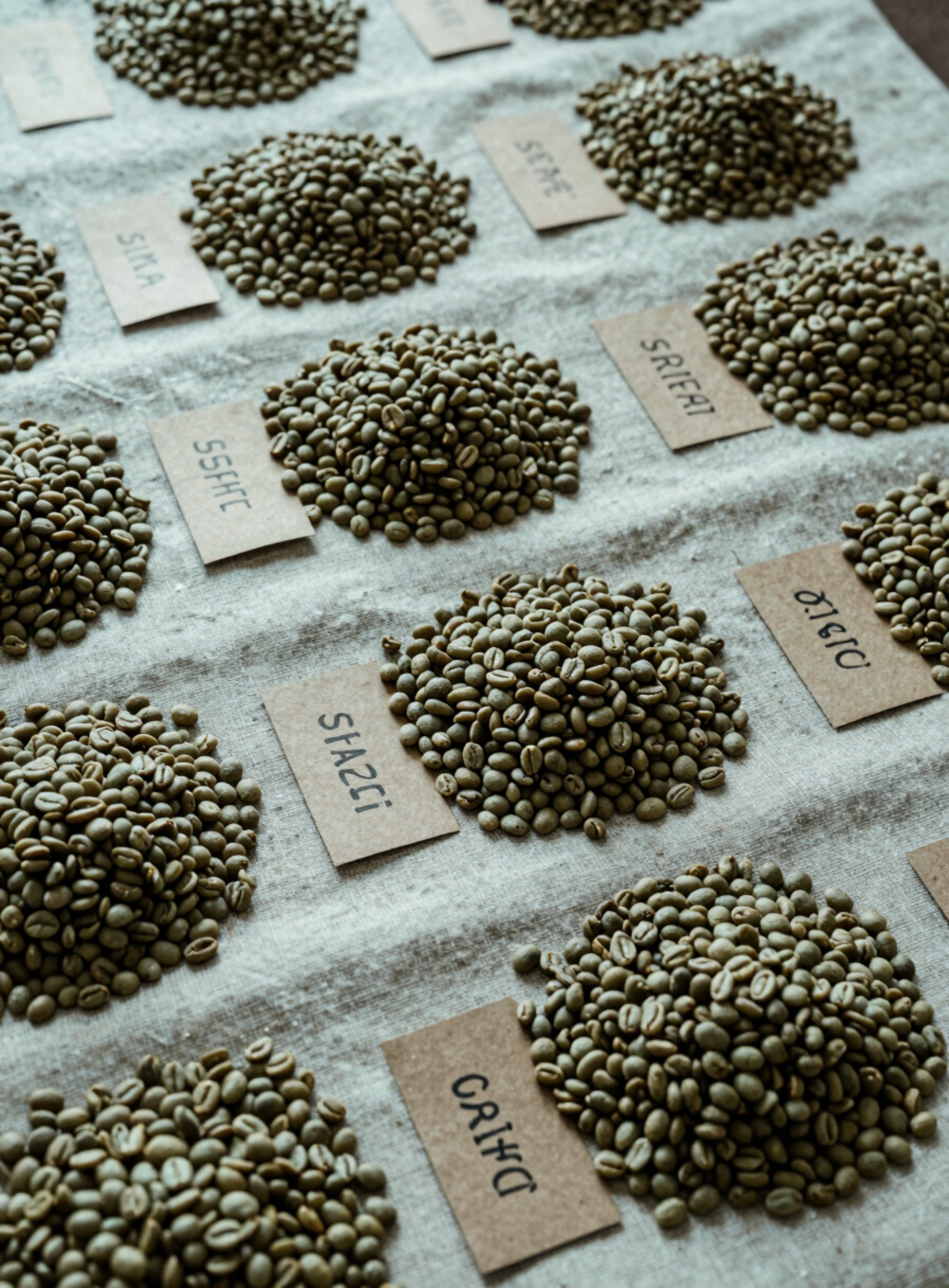
Those who enjoy their coffee black are drinking a virtually calorie-free beverage: since carbohydrates, fats, and proteins remain in the coffee grounds during brewing, only water, caffeine, acids, and valuable traces of potassium and magnesium end up in the cup. However, looking at the unroasted bean—known as green coffee—reveals where the biological foundation for later enjoyment is laid.
The green bean largely consists of insoluble plant fibers (cellulose), proteins, and coffee oils. Although these nutrients do not end up in our drink, their exact chemical composition of fats, sugars, and acids in the raw state crucially determines which flavors the roasting process can bring to life in the first place.
The Arabica bean is the frontrunner when it comes to flavor carriers: with a high fat content (15–17%) and almost twice as much natural sugar (6–9%) as other varieties, it provides the perfect chemical basis for fruity, floral, and complex nuances.
The Robusta bean, by contrast, skimps on sugar but relies on strength. It contains significantly fewer coffee oils, but almost double the amount of caffeine and plenty of chlorogenic acid. This combination provides the typical bitterness, an intense roast profile, and the dense, stable crema that is indispensable for a classic espresso.
The rarer varieties, Liberica and Excelsa, follow their own paths. They are very low in sugar and largely consist of dense plant fibers. While Liberica conveys smoky-woody notes with a moderate fat content, Excelsa concentrates distinct fruit acids.
In short: The biological nutritional values of the bean form the genetic foundation—they determine the theoretical potential for sweetness, acidity, and bitterness before the roasting process completes the flavor.
Want to know what happens to these ingredients during roasting? Exciting details and further information about the different roast levels and how they influence the taste can be found here.
(Scale: 1 bean = low caffeine, 5 beans = maximum caffeine)
🍭 The Sugar-Ranking (Sucrose)
🥑 The Fat -Ranking (Lipids)

⚡ The Caffeine-Ranking
Robusta
Liberica
Excelsa
Arabica
Arabica
Robusta
Excelsa
Liberica
(Scale: 1 bean = very tart/low sugar, 5 beans = maximum natural sugar)
Arabica
Liberica
Excelsa
Robusta
(Scale: 1 bean = lean/low oils, 5 beans = maximum flavor carrier)
Taste Differences at a Glance
The wide range of coffee beans invites you on an exciting journey through diverse flavor profiles. Arabica is often preferred for its smoother and sweeter taste—ideal for anyone who appreciates a gentler coffee experience. In contrast, lovers of an intense caffeine kick appreciate the bold and earthy profile of the Robusta bean. Liberica and Excelsa, with their very own aromas, invite you to discover the unconventional sides of coffee tasting.
Ultimately, the choice of coffee bean provides the genetic predisposition and the foundation for the final aroma. However, it is the interaction with the right roast level that decides which facets of this potential actually land in the cup. Every coffee lover can discover their personal preferences by experimenting with different beans, roasts, and brewing methods to bring out specific characteristics to their best advantage.
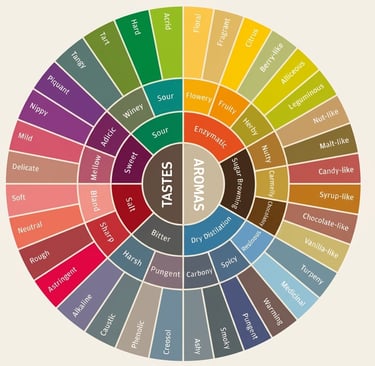
But how are the taste and aroma of coffee systematically determined in the industry anyway? To objectively evaluate subtle nuances, coffee professionals worldwide use a standardized tasting procedure called "cupping". During this process, coffee is freshly brewed, slurped, and analyzed according to strict rules. To then document these complex impressions uniformly, the industry relies on a very specific tool:
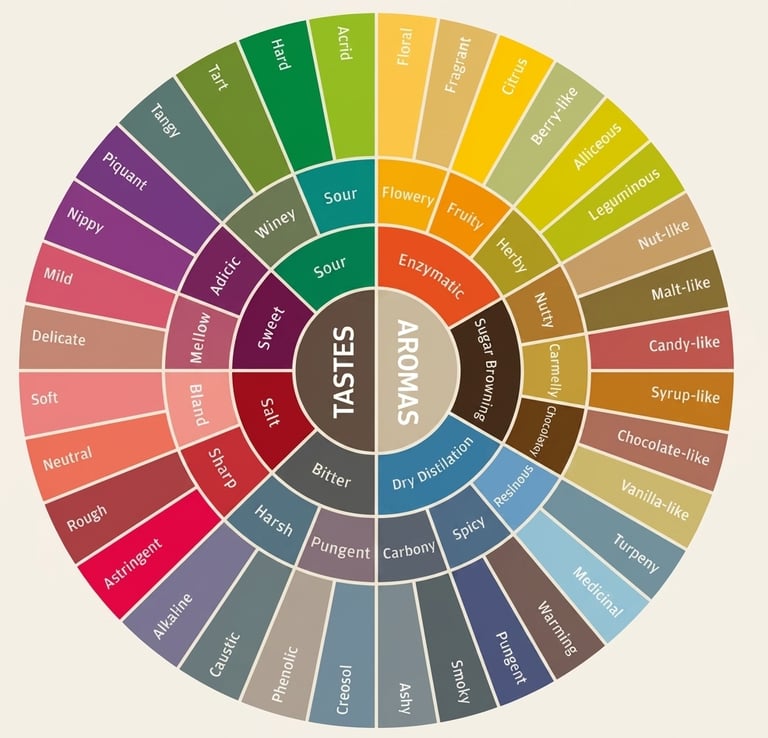
The legendary Coffee Taster's Flavor Wheel was developed in 1995 by the SCAA ( Specialty Coffee Association of America) and is considered the "universal language" of coffee tasting. It systematically divides the sensory experience into two halves:
Left (TASTES): Shows the pure perception on the tongue—from the four basic tastes (Sweet, Sour, Salty, Bitter) in the center to fine nuances on the outer edge.
Right (AROMAS): Maps what we perceive through the nose. It is divided according to the chemical processes during roasting—from fruity-fresh fruit notes (Enzymatic) to chocolatey nuances (Sugar Browning) and bold, smoky aromas (Dry Distillation).
This wheel helps professionals and connoisseurs worldwide to precisely describe and classify the subtle differences of Arabica, Robusta, and co.


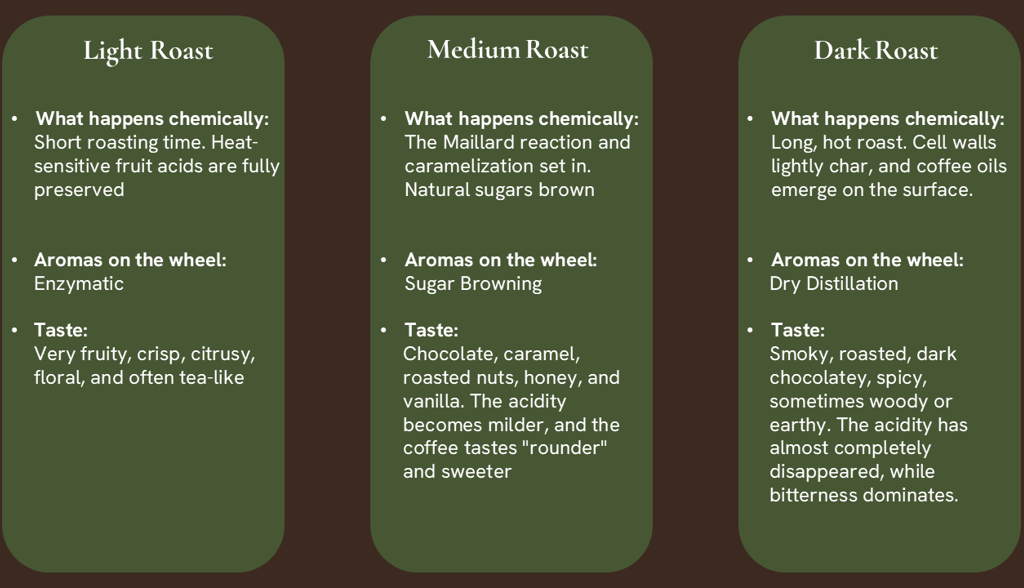
The full potential of a coffee bean only unfolds through the craft of roasting. The roast decisively determines which flavors ultimately end up in the cup. In this regard, the classic coffee flavor wheel is structured like a timeline of the roasting process: while a light roast emphasizes the fruity, herbal nuances (Enzymatic), a medium roasting time brings out sweet notes of chocolate and caramel (Sugar Browning), until the process finally transitions into bold, smoky roasted aromas (Dry Distillation) in dark roasts.
Overview of Roast Levels: Flavor & Aroma
Click here for more information about the different roast levels and their impact on flavor.
Conclusion
Understanding the different coffee bean varieties and their unique aromas is essential for coffee lovers. Whether you prefer the mild, sweet notes of Arabica, the bold taste of Robusta, or the distinct profiles of Liberica and Excelsa—there is a perfect bean for every palate. Exploring these varieties opens up a whole world of taste experiences and ensures that every cup of coffee can hold a wonderful new discovery.


